Walking to Ushguli, Europe's Highest Village
Four days, roughly 58 kilometres, one pass, and a village of medieval towers at the end of it. This is the trek people come to Georgia for — and the one they most often under-prepare for.
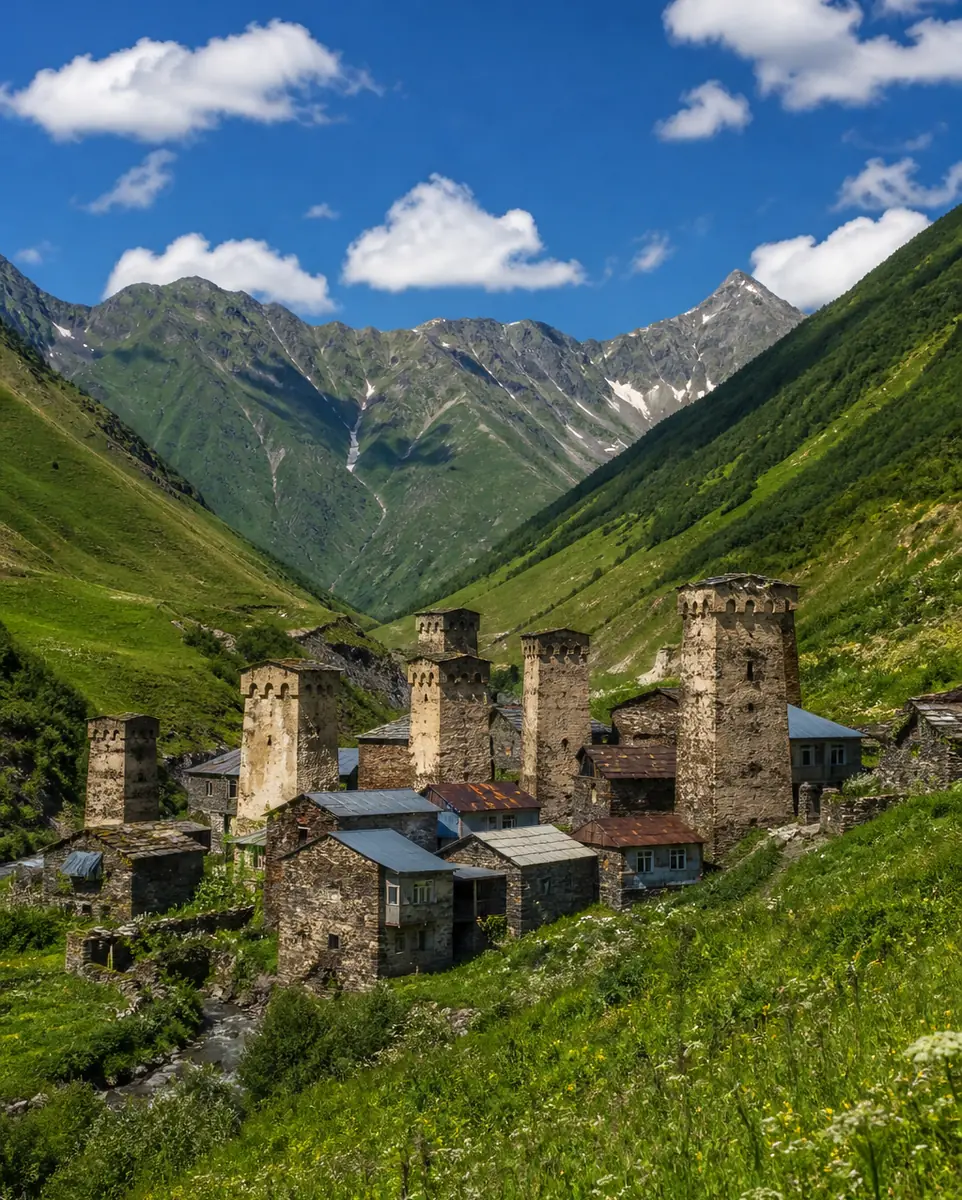
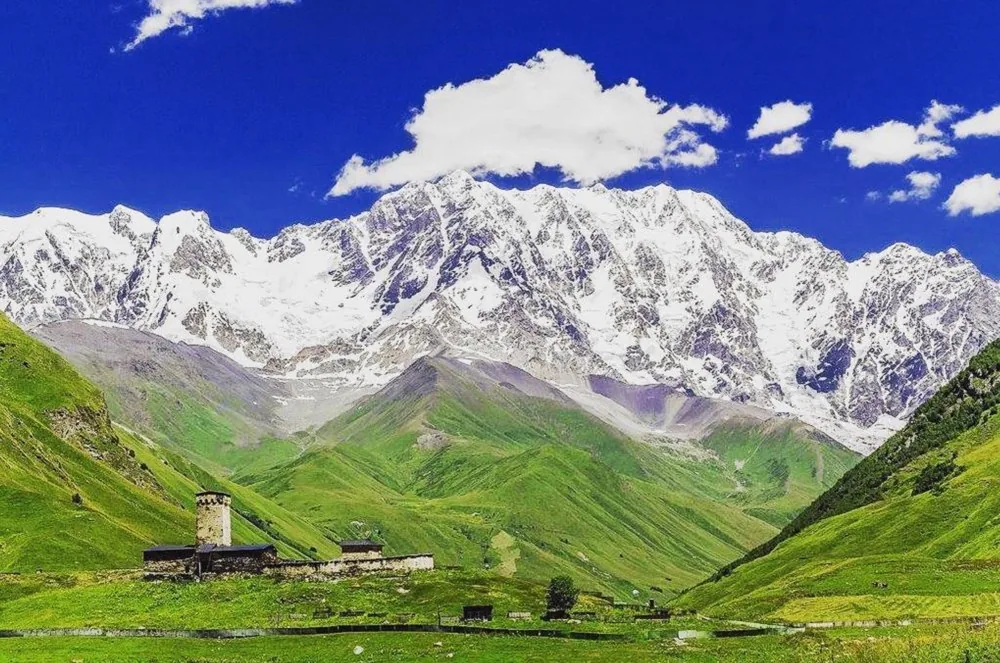
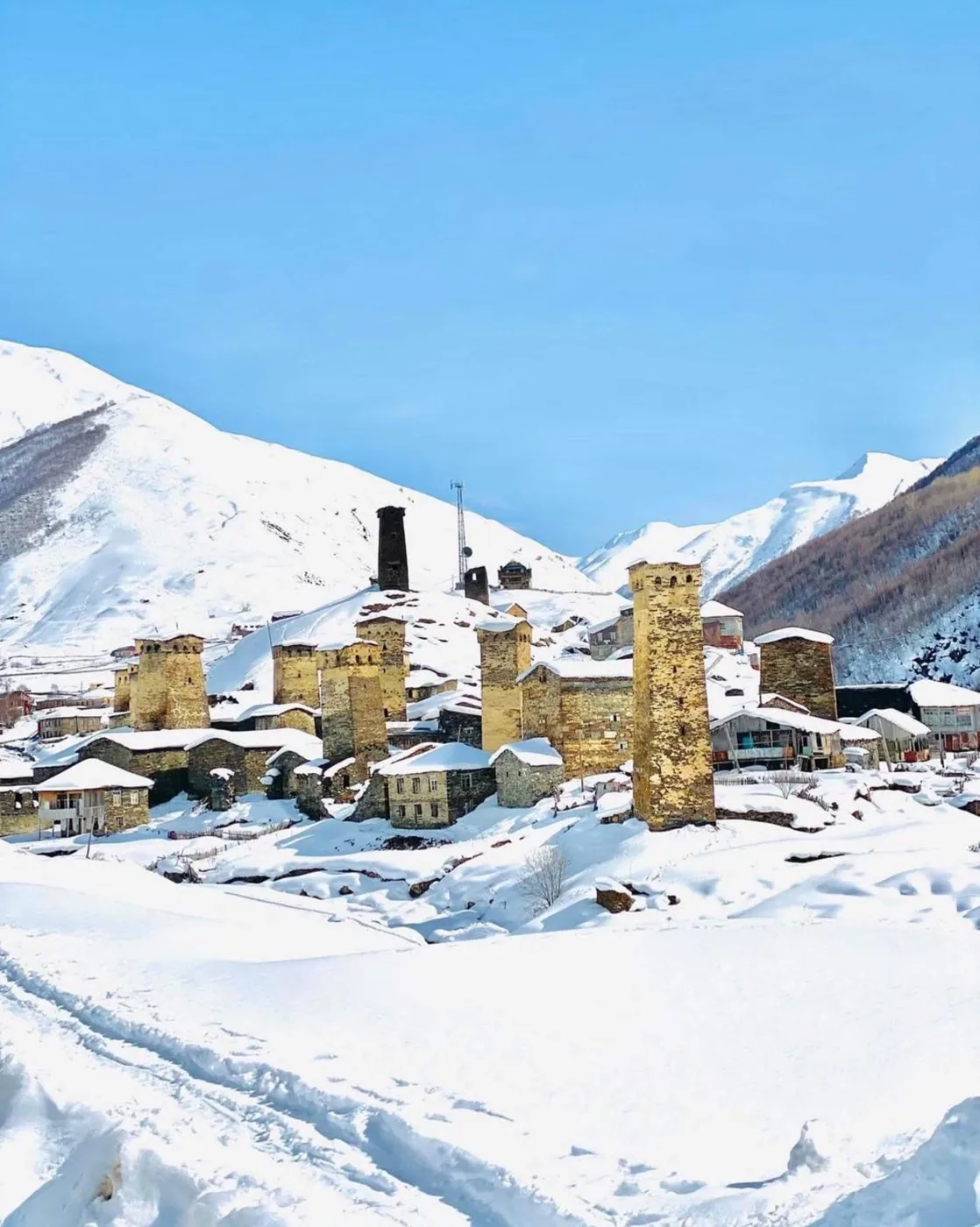
Ushguli sits at 2,100 metres under the south face of Shkhara, Georgia's highest mountain. It claims to be the highest continuously inhabited settlement in Europe, and while that claim gets argued about in comment sections, nobody argues about what it looks like: forty-odd stone defensive towers, built between the ninth and thirteenth centuries, still standing in a working village where cows have right of way.
You can drive there. Plenty of people do, in three hours from Mestia on a road that is now mostly paved. We would rather you walked.
The route, day by day
Day 1 — Mestia to Zhabeshi, 14 km
A gentle start: forest track, a long contour above the Mulakhi valley, and a village at the end with more guesthouses than it needs. About five hours. This is the day people describe as "easy", and it is, which is why day two catches them.
Day 2 — Zhabeshi to Adishi, 16 km
The real climb. Up through pine forest to a ski-lift saddle at 2,350 metres, then a long descent into Adishi — a village of nine families and a great deal of silence. Seven hours with stops. The ascent is 1,000 metres and it comes early, on tired legs, which is a combination worth respecting.
Day 3 — Adishi to Iprari, 17 km
The day with the river crossing. An hour out of Adishi the trail meets glacier meltwater that is knee-to-thigh deep by afternoon and cannot be jumped. There are horsemen who will carry you across for around 20 GEL, and there is no shame whatsoever in using them — the alternative is a cold, fast, rocky wade that we only do early in the morning.
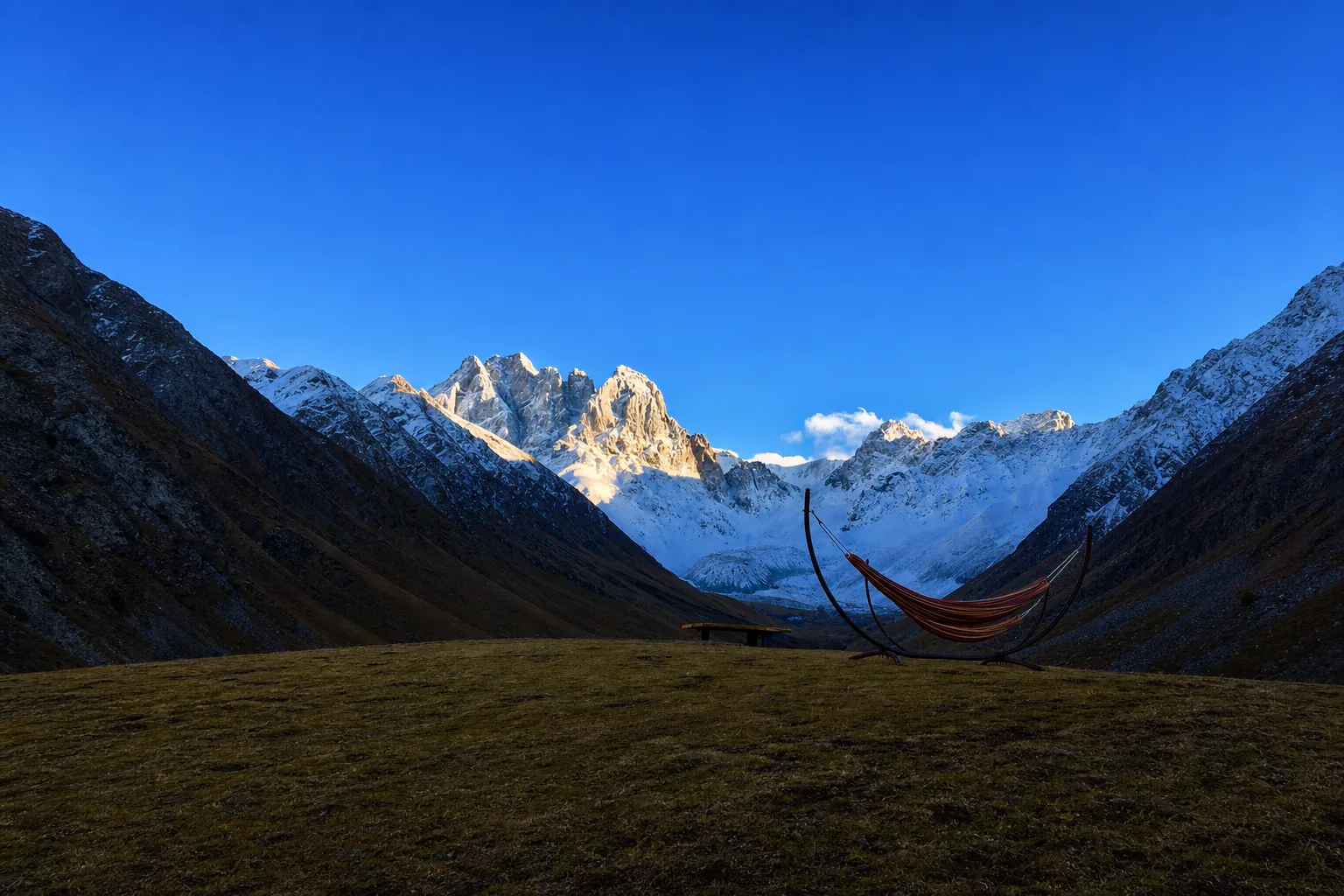
After the crossing comes the Chkhutnieri pass at 2,722 metres, the high point of the whole route, and then a long knee-punishing descent to Iprari.
Day 4 — Iprari to Ushguli, 11 km
The short, easy, entirely beautiful day. Mostly along the valley floor, with the towers appearing an hour before you reach them. Four hours, and you arrive in time for lunch.
Honest fitness check
If you can walk 15 km with 800 metres of ascent, carrying a day pack, and do it again the next morning without dreading it — you will enjoy this trek. If you cannot, you will still finish it, but days two and three will be work rather than pleasure. There is no technical difficulty anywhere on the route: no scrambling, no exposure, no equipment beyond boots and poles.
Where you sleep
Family guesthouses, every night, in real houses. Expect a shared bathroom, an enormous dinner, and homemade chacha offered at a point in the evening when it seems like a good idea. Rooms cost 60–90 GEL per person with dinner and breakfast included. In July and August they need booking; in June and September you can usually walk in, though we book anyway.
When to go
The season runs from mid-June to early October. Before mid-June there is still snow on the Chkhutnieri pass and the Adishi river is dangerously high. After early October the guesthouses start closing and the weather stops being predictable.
The best two weeks, if we are being specific, are the second half of September: dry ground, cold nights, clear air, and the horsemen still at the river crossing.
The towers were built because Svaneti spent eight hundred years being difficult to reach. Walking in is still the way to understand that.
We run this trek as a guided six-day trip including the transfers from Tbilisi — see the Svaneti journey, or ask us about the self-guided version with luggage transfers.